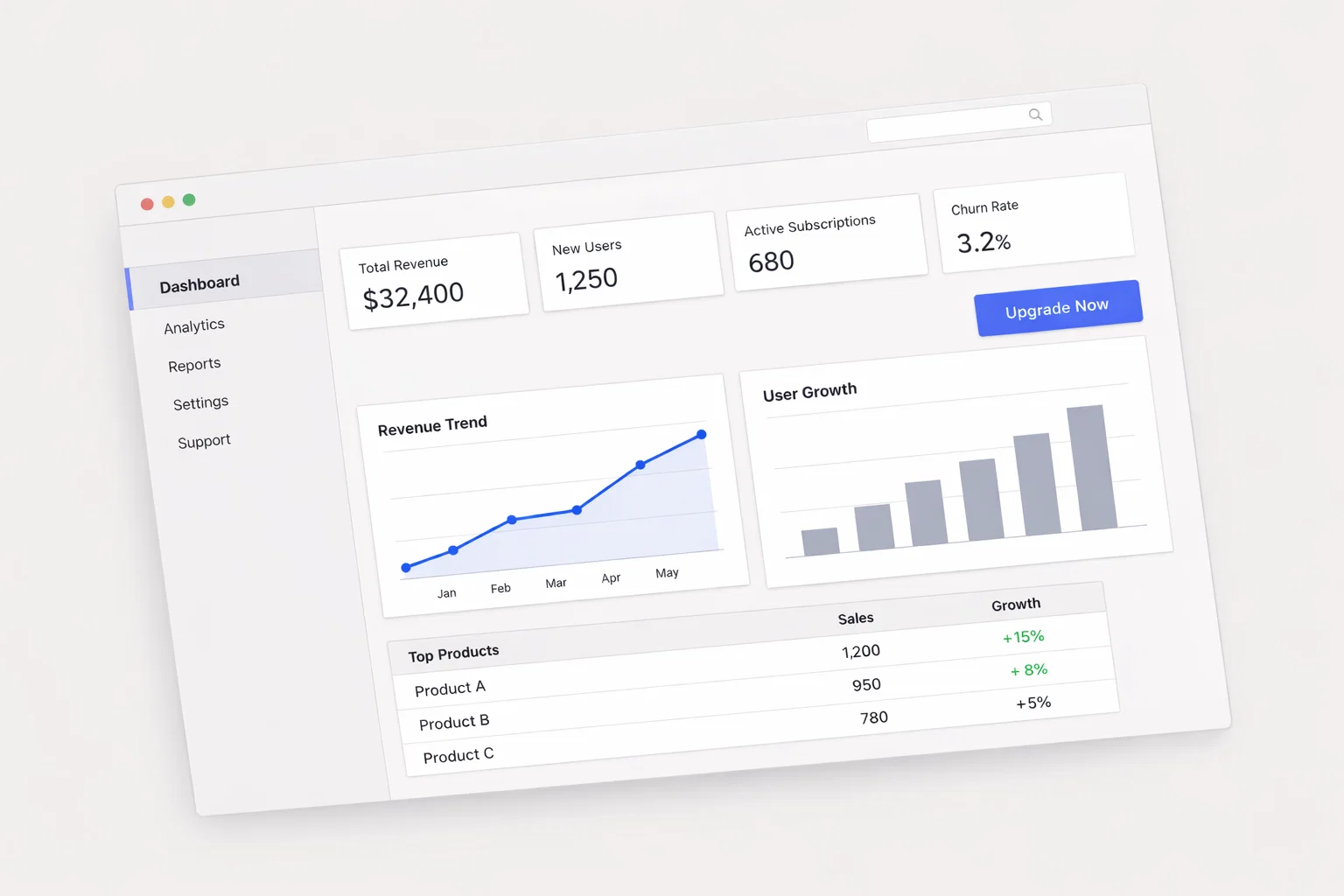


Investing in the web studio niche—encompassing digital design, full-stack development, and UX/UI agencies—requires a shift from traditional product-based analysis to a human capital and technology-integration framework. As we navigate the 2025–2026 market cycle, these firms are no longer just “website builders”; they are the primary architects of the AI-integrated corporate interface.
Effective investment in this space is not merely about identifying creative talent but about assessing operational scalability, intellectual property (IP) retention, and AI-augmented productivity. This guide provides a structured methodology for institutional-grade capital allocation within the digital services industry.
Executive Summary: The Web Studio Investment Thesis
The strategic rationale for investing in web studios in 2025–2026 centers on the Digital Transformation 2.0 wave. While the initial wave focused on “being online,” the current cycle focuses on “being AI-native.” Web studios that successfully integrate generative AI into their workflows are seeing significant margin expansion compared to traditional labor-heavy models.
Key Takeaways
- Primary Driver: Convergence of high-end design with complex AI backend integration.
- Risk Profile: Moderate to High, primarily driven by low barriers to entry and rapid technological obsolescence.
- Time Horizon: 3–7 years to capture the full cycle of client digital overhauls.
| Metric | Assessment | Comment |
| Growth Potential | High | Driven by corporate needs for custom AI interfaces. |
| Income Stability | Moderate | Moving from project-based to high-margin retainer models. |
| Capital Intensity | Low | Primarily human capital; low physical CAPEX. |
| Market Correlation | Positive | Strongly correlated with broader Tech and Marketing spend. |
Understanding the Nature of the Web Studio Business
The economic logic of a web studio is built on the monetization of specialized expertise. Unlike SaaS (Software as a Service) companies that build once and sell many times, web studios typically operate on a Service-plus-Product model. Revenue is generated through project fees, recurring maintenance retainers, and occasionally, performance-based royalties on the digital products they build.
Structural Characteristics
- Operating Leverage: Historically low, but increasing as AI tools reduce the man-hours required for coding and testing.
- Revenue Model: Transitioning from “Time and Materials” to “Value-Based Pricing.”
- Client Concentration: High risk; often 20% of clients represent 80% of revenue.
| Feature | Web Studio (Service) | SaaS (Product) |
| Margins | 20–40% | 70–90% |
| Cash Flow | Immediate/Positive | Delayed/Heavy initial burn |
| Scalability | Linear (Human-linked) | Exponential |
| Retention | High (High switching costs) | Variable (Churn-sensitive) |
Macroeconomic Drivers Affecting the Digital Services Sector
In the 2025–2026 landscape, web studios are highly sensitive to monetary policy and corporate Capex cycles. As interest rates normalize after the volatility of the early 2020s, companies are unlocking “digital transformation” budgets that were previously frozen. However, persistent inflation in skilled labor costs remains a headwind for studios that haven’t automated their internal processes.
Macro Sensitivity Factors
- GDP Growth: Directly impacts corporate marketing and R&D budgets.
- Interest Rates: Influences the discount rate for future cash flows and the availability of M&A financing.
- Labor Market Dynamics: Shortages in senior DevOps and AI engineers can compress margins.
| Macro Factor | Impact Direction | Sensitivity Level |
| Interest Rate Normalization | Positive (Valuation support) | Moderate |
| AI Regulation | Mixed (Compliance costs vs. Demand) | High |
| Global Labor Arbitrage | Negative (Price competition) | High |
| Enterprise Digital Spend | Positive (Volume) | Very High |
Market Structure and Competitive Landscape
The web studio market is highly fragmented, ranging from freelance collectives to multi-billion dollar digital transformation firms. Institutional investors should focus on the “Mid-Market”—agencies with 50 to 500 employees—as these firms offer the best balance of professionalized management and high growth potential.
Market Participants
- Global Integrators: (e.g., Accenture Interactive, WPP) Massive scale, high-end enterprise clients.
- Specialized Boutiques: Focused on niche technologies (e.g., Web3, AR/VR, AI-UX).
- In-house Agencies: Growing trend of large corporations building their own internal studios.
Institutional Characteristics:
- Low Entry Barriers: High competition at the “bottom end” of the market (SMB websites).
- High Switching Costs: Deep integration into a client’s tech stack creates a “moat.”
- Consolidation Trend: Significant PE (Private Equity) activity as firms look to roll up smaller studios to achieve scale.
Investment Vehicles for Gaining Exposure
Investors can access this niche through several channels, depending on their liquidity needs and risk tolerance.
| Vehicle | Liquidity | Cost | Risk Level | Suitable For |
| Public Equities (Direct) | High | Low | Moderate | Retail & Institutional |
| Private Equity Funds | Low | High | High | Ultra-HNI / Institutional |
| Strategic M&A | Very Low | Variable | Very High | Corporate Investors |
| Thematic ETFs | High | Low | Moderate | Diversified Portfolios |
- Public Equities: Investing in firms like Globant, EPAM Systems, or the digital arms of large consulting firms.
- Private Placements: Direct equity stakes in high-growth, mid-sized agencies (pre-IPO).
- Revenue Share Agreements: An emerging model where investors provide growth capital in exchange for a percentage of top-line revenue.
Fundamental Analysis Framework: The “Studio-Audit” Model
When evaluating an individual web studio, traditional P/E ratios are insufficient. Investors must look at utilization rates and pipeline quality. A disciplined framework involves analyzing the efficiency of the “human engine.”
Key Performance Indicators (KPIs)
- Utilization Rate: Percentage of employee hours billed to clients (Target: 70–80%).
- Average Revenue Per Head: A proxy for the agency’s pricing power and efficiency.
- Backlog-to-Revenue Ratio: Predictability of future cash flows.
Valuation Methodology
For private studios, the most common metric is a multiple of Adjusted EBITDA.
$$Enterprise Value (EV) = EBITDA \times Multiple$$
In 2025, mid-market multiples generally range from $6x$ to $12x$, depending on the percentage of recurring revenue and specialized AI capabilities.
| Metric | Healthy Range | Red Flag |
| Gross Margin | 45% – 55% | < 35% |
| EBITDA Margin | 15% – 25% | < 10% |
| Revenue Growth | 15% – 30% | Flat or Declining |
| Churn Rate | < 10% | > 20% |
Risk Assessment: Structural and Cyclical Hazards
The primary risk in 2026 is AI Disruption. If a studio’s value proposition is merely “writing code” or “making layouts,” they face a high probability of displacement by automated agents.
Risk Mapping
| Risk Type | Probability | Impact | Mitigation Strategy |
| Technological (AI) | High | Severe | Invest in “AI-Augmented” firms with deep strategy moats. |
| Key Person Risk | Moderate | High | Ensure multi-year equity vesting for founders and leads. |
| Cyclical Downturn | Moderate | Moderate | Focus on studios with multi-year government or healthcare contracts. |
| IP Litigation | Low | High | Robust legal vetting of code ownership and AI-gen assets. |
- Stress-Testing Assumption: What happens if a major client (25% of revenue) leaves?
- Stress-Testing Assumption: Can the studio survive a 20% increase in developer salaries without losing margins?
Portfolio Allocation Strategy
Web studios should be categorized as Growth-Oriented Tech Services. They offer higher yields than pure-play tech stocks due to their cash-flow-positive nature but carry higher operational risks.
Allocation Models
- Conservative: 2–3% allocation within a tech-heavy portfolio, focused on public digital transformation giants.
- Aggressive Growth: 7–10% allocation, including private equity stakes in boutique “high-alpha” studios.
Allocation Methodology:
- Assess total tech exposure.
- Identify “Service vs. Product” balance.
- Allocate to studios that serve “Anti-Cyclical” industries (e.g., Infrastructure, Utilities, Government).
ESG and Sustainability: The Digital Footprint
In 2025, ESG for web studios focuses on Digital Accessibility and Responsible AI. Studios that ignore “Web Content Accessibility Guidelines” (WCAG) face legal risks and a shrinking market share.
| ESG Factor | Relevance | Risk Level |
| Digital Accessibility | High | Legal/Reputational |
| Data Privacy (GDPR/CCPA) | Very High | Regulatory |
| Employee Wellbeing | High | Operational (Burnout) |
| AI Ethics | Emerging | Structural |
Implementation Roadmap for Investors
For an institutional or sophisticated retail investor, the execution path is as follows:
- Define Objective: Are you seeking capital appreciation (Private Equity) or stable dividends (Public Consulting Firms)?
- Screening: Filter for agencies with >20% EBITDA margins and a clear AI integration roadmap.
- Due Diligence: Conduct deep-dive interviews with the “Top 5” clients to assess service stickiness.
- Position Sizing: Limit any single private studio exposure to 15% of the total “Alternatives” sleeve.
- Monitoring: Monthly review of utilization rates and pipeline-to-revenue ratios.
Appendix: Metrics and Analytical Tools
To calculate the “Efficiency Frontier” of a web studio, use the Revenue Per Employee metric as a primary filter.
Performance Formulas:
- Billability: $\frac{\text{Total Billable Hours}}{\text{Total Available Hours}}$
- Net Revenue Retention (NRR): $\frac{\text{Starting Revenue} + \text{Expansion} – \text{Churn}}{\text{Starting Revenue}}$
Data Sources:
- Public filings (10-K, 10-Q) for firms like Accenture, Globant, and EPAM.
- Industry benchmarks from the Agency Management Institute (AMI).
- Gartner Digital Transformation spending forecasts.
Frequently Asked Questions
- What is the minimum capital for private investment?
- Typically $250,000 for direct private placement, though syndicate platforms have lowered this to $25,000.
- Is AI a threat or an opportunity?
- It is a threat to “commodity” studios and a massive margin-expansion opportunity for “strategic” studios.
- What is the ideal exit?
- Acquisition by a larger global consulting firm or a Private Equity “Roll-up” play is the most common and profitable exit.
Disclaimer: This guide is for informational purposes only and does not constitute financial advice. Investing in the digital services sector involves significant risk of loss. Always consult with a certified financial advisor before making capital allocation decisions.